If you’re searching for where do I register my dog in Whitfield County, Georgia for my service dog or emotional support dog, the key is to separate two different ideas: (1) local dog licensing / rabies compliance (handled by local government/public health) and (2) the legal status of a service dog (set mostly by federal law).
In Whitfield County, registering or “licensing” a dog typically means making sure your dog is properly vaccinated for rabies and that you follow any local tag or registration rules enforced through local animal control and public health offices. This applies whether your dog is a pet, a service dog, or an emotional support animal.
Where to Register or License Your Dog in Whitfield County, Georgia
Because dog licensing and rabies enforcement are often handled locally, start with the official Whitfield County animal services office and the local public health environmental health office. These offices are common points of contact for animal control dog license Whitfield County, Georgia questions, rabies exposure guidance, and local enforcement.
Whitfield County Animal Shelter / Animal Control (Whitfield County Government)
Whitfield County Environmental Health (North Georgia Health District)
City of Dalton (Animal Control Board / City Administration Contact)
Overview of Dog Licensing in Whitfield County, Georgia
What “licensing” usually means locally
In many Georgia communities, a local “license” is closely tied to rabies vaccination compliance. You may hear people refer to a “rabies tag,” “registration,” or a “license tag” interchangeably. The practical purpose is to create a reliable way for animal control to: (a) confirm rabies vaccination, and (b) identify an owner if a dog is found at-large.
Most licensing is handled locally
There is no single statewide “Georgia dog license” that replaces local requirements. Instead, counties and cities commonly manage licensing, animal control, and enforcement through local offices. That’s why the most accurate answer to where to register a dog in Whitfield County, Georgia is: start with Whitfield County Animal Control and verify any additional city-specific rules if you live inside a municipality.
Rabies vaccination expectations (public health priority)
Georgia public health guidance emphasizes keeping owned dogs and cats regularly vaccinated for rabies and reporting bites to the appropriate local health authorities. If there’s an animal bite or possible rabies exposure, public health and animal control procedures may include quarantine/observation rules for domestic animals depending on the circumstances.
How Dog Licensing Works Locally in Whitfield County, Georgia
Step-by-step: a practical process to follow
- Confirm your location (county vs. city). If you’re in Whitfield County (including Dalton and nearby areas), local county animal services is typically the starting point for licensing/tag questions.
- Get current rabies vaccination from a veterinarian. Keep the rabies certificate/proof in your records. Many licensing processes require it.
- Contact Whitfield County Animal Control for the current licensing/tag procedure. Ask what is required for issuance, renewal, replacement tags, and whether any specific paperwork is required for residents inside city limits.
- Keep identification on the dog. Even if your dog is a service dog, having current identification helps if your dog gets lost or if animal control needs to contact you quickly.
What if my dog is a service dog or emotional support dog?
Your dog’s role does not automatically replace local requirements. In other words, a service dog can still be subject to the same dog license in Whitfield County, Georgia expectations (vaccination, tags, local compliance) that apply to other dogs. What changes is how the dog is treated for access to public places (service dogs) or housing accommodations (service dogs and ESAs).
Why local offices matter (and why “online registrations” often aren’t valid)
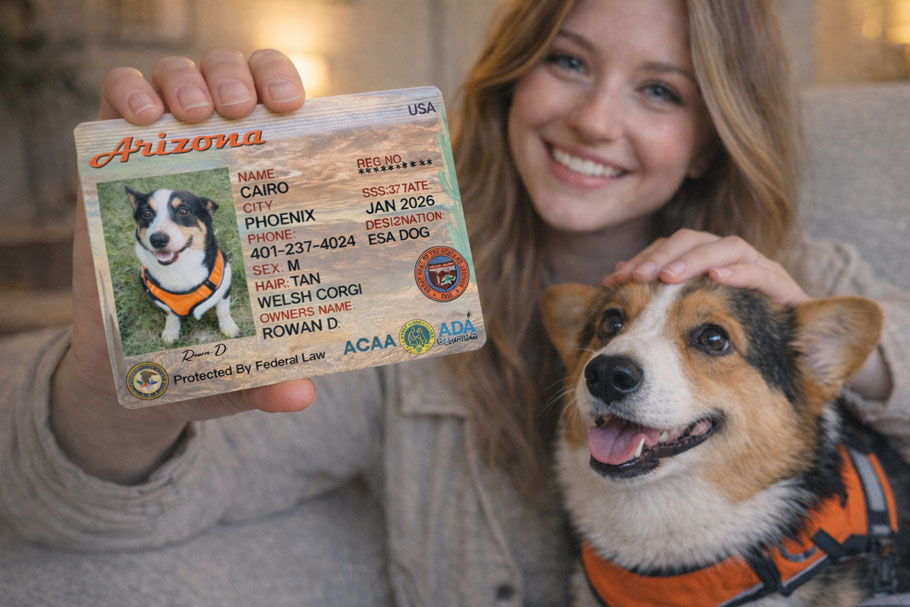
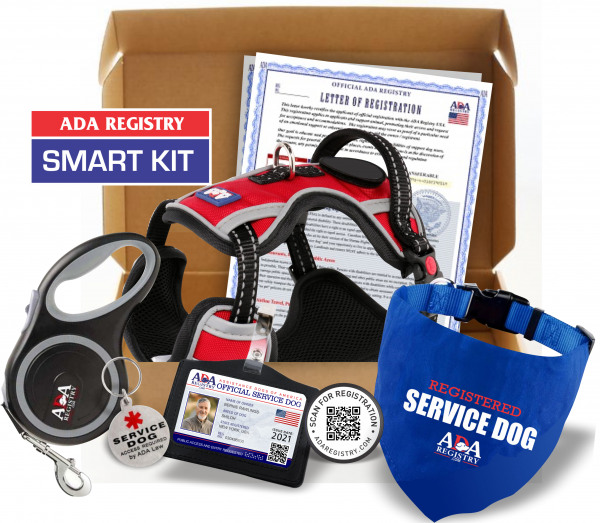
If you see websites offering instant “registration” for a fee, that is usually not the same as local licensing. For an animal control dog license Whitfield County, Georgia question, the authoritative answers come from Whitfield County government animal services and local public health—rather than third-party sellers.
Service Dog Laws in Whitfield County, Georgia
What counts as a service dog (ADA basics)
Under federal ADA guidance, a service animal is generally a dog trained to do work or perform tasks for a person with a disability. The task must be directly related to the disability. Comfort alone (without trained tasks) does not make a dog a service animal under the ADA.
No mandatory service dog “registration” for public access
The ADA does not require a service dog to have a special ID card, vest, certification, or registration for a handler to have public access rights. When it’s not obvious what a dog does, staff in many settings are generally limited to asking: whether the dog is required because of a disability and what work/task the dog has been trained to perform.
Local licensing still applies
Even though you don’t “register” a service dog for ADA purposes, service dogs are typically still subject to local public health and animal control rules that apply to all dogs—such as rabies vaccination and local licensing/tagging. So if your core question is where do I register my dog in Whitfield County, Georgia for my service dog, the practical answer is: use the same local licensing path as any other dog, and keep your dog’s vaccinations and records current.
Emotional Support Animal Rules in Whitfield County, Georgia
An ESA is not the same as a service dog
An emotional support animal (ESA) can provide therapeutic benefit through companionship, but an ESA is not the same as a service dog under the ADA. That means ESAs generally do not have the same public-access rights to enter places where pets are not allowed.
Housing vs. public places
ESA issues most often come up in housing situations (for example, requesting an accommodation from a landlord). Public access to restaurants, stores, and most government offices is usually controlled by ADA service-animal rules, not ESA status.
Licensing and rabies requirements still matter
Even when a dog is an ESA, local responsibilities typically remain the same: comply with rabies vaccination rules and any applicable local tags or licensing requirements. If you’re asking where to register a dog in Whitfield County, Georgia for an ESA, you should still start with Whitfield County Animal Control and confirm the current procedure.
Frequently Asked Questions
For ADA public access, there is generally no mandatory service-dog registry. However, your dog may still need to comply with local requirements that apply to all dogs—especially rabies vaccination and any local tag or dog license in Whitfield County, Georgia rules. If you want the most accurate local guidance, contact Whitfield County Animal Control.
Start with Whitfield County Animal Shelter / Animal Control in Dalton. If you live inside a city boundary, also verify whether your municipality has additional requirements. For rabies exposure or bite-related public health questions, the Whitfield County Environmental Health office is also a key official contact.
No. A service dog is trained to perform tasks related to a disability (ADA framework). An emotional support animal provides comfort/therapeutic benefit but does not automatically have the same public-access rights. Both, however, can still be expected to follow local vaccination rules and any animal control dog license Whitfield County, Georgia requirements that apply to all dogs.
A rabies tag typically indicates the dog has been vaccinated for rabies and is tied to a vaccination certificate. A dog license (when required locally) is a local government registration/tag requirement that may be linked to proof of rabies vaccination. Procedures vary by locality, so confirm the current process with Whitfield County Animal Control.
For ADA public access, service dogs are generally not required to have registration papers, and staff typically are not supposed to demand documentation as a condition of entry. That said, separate from access rights, local rules can still require vaccination and local licensing like any other dog.